Are Guttering And Downpipe Repairs The Most Effective Thing That Ever Was?
Guttering and Downpipe Repairs The guttering and downpipes around your home redirect water away from foundations and walls, thus protecting your home from serious damage. It's important to repair them as soon as you can when they're damaged. To begin start, make use of a wire bristle broom to clean any paint that is loose. Cut Downpipe Specialists of repair taping just a few centimetres wider than the downpipe's length and take off the backing paper. Gutters A guttering system plays an essential role in any building. It helps to direct water away from foundations, walls and other structural elements and helps to prevent serious damage. It is crucial to fix your guttering as fast as you can if it has sprung a hole. It is first necessary to conduct an exhaustive inspection of your gutters. After you've completed this take note of any issues and work out the best method to fix them. Gutters can be damaged due to many reasons, including aging or damage caused by storms or being struck by fallen debris. If you spot cracks or holes, you should consider replacing the entire section of guttering. This is more cost effective than repairing smaller areas. If the issue is that a crack or tear has developed, it's easy enough to repair these using gutter sealant. You'll also have to clean your downpipes and gutters thoroughly prior to applying the sealant. This will ensure that the area is free from rust or dirt, and will help the sealant bond effectively to the guttering. Another problem with gutters that can occur is that they become clogged up with leaves and dirt. A blocked gutter can lead to the gutter to sag, which is why it's crucial to clean them regularly. A blocked gutter can lead to basement flooding It's crucial to check for signs of water and mildew around the foundations of your house. If your gutters are leaking, it's likely due to an overflow or because the downpipes have become loose. You can fix both of these issues by getting rid of your downpipes and gutters. Clean them and spray them with silicone lubricant. After the silicone lubricant dried, you can put back in your gutters and downpipes. You can then use a bucket or hose to flush the seals. If the seals are faulty then you'll have to replace the downpipes or guttering. The price of this will depend on the material used and the dimensions of the guttering or downpipe. It is best to request a quote from several different gutter contractors prior to making any decisions. Downpipes Downpipes are a critical part of a roof drainage system which helps prevent water damage. They are used to divert rainwater away from the roof of a building and send it to a location of choice, such as an area for soaking or a garden. Without downpipes, rainwater may cause flooding, pooling, or even cause damage to the foundation of a property. Traditionally, downpipes were constructed of metal. They are not the best choice since they rust and corrode over time. Modern homes employ PVC downpipes for their durability and longevity. If your downpipes begin to rust or break, you should seek out a professional immediately to repair them. The number of downpipes needed for a home will depend on the size of the roof and its pitch. Ideally, downpipes should be spaced at least 9m (30ft) to 12m (39ft) apart to ensure that stormwater is able to flow smoothly from one pipe to the next. If the downpipes have too much space between them, they can cause turbulence and decrease performance. If you have a gutter that is separating from the wall, it could be an indication of severe issues with the straps or astragals. In the majority of cases, they will require replacement to stop the downpipe from detaching from the gutter. If not properly maintained, this can lead to major structural damages that may be expensive to repair. Another common problem that occurs with downpipes is blockages. They can happen when leaves and other debris become stuck in the pipe. If left unattended, this can cause serious damage to the downpipes and gutter. To prevent clogs it is crucial to regularly clear the downpipes of any debris. A downpipe upgrade could be an excellent way for car enthusiasts to increase performance while also improving the overall experience. It improves the flow of exhaust and reduces backpressure, which can also help with fuel economy. It's important to research the pros and cons of installing a downpipe prior to you decide. It's a good idea to talk to experts in order to understand the pros and con of this type of modification. A professional can assist you in selecting the appropriate downpipe for your vehicle. Clogs It's not unusual for guttering and downpipes to be found on the exterior of your home to wear out. The good thing is that it's comparatively simple to fix them if you notice damage in the early stages. Make sure that your downpipes aren't blocked. A blocked downpipe could cause drops to splash back up against the walls of your home and can also encourage water to find a way into your foundations or walls. The most common cause is a build-up of debris and leaves, however, a bird's nip, or the branch of a tree that has fallen might be the cause. To clear a downpipe that is blocked, start by removing any debris you see. Then, gently run water down the pipe using a hose to eliminate any blockages. This will help clear away the obstruction and allow water to flow freely down the drain. You could also try tying a rope to one of the gutter hangers and then running it through the downpipe. This will stop water drops from falling down the downpipe. The rope will impede the flow of water and may not be a good idea in the case of an area of your gutter that is susceptible to overflow and can easily be blocked by twigs or other debris. If you decide to employ this method, make sure to choose nylon ropes, as a natural fibre rope will turn brown. You can also try a gutter repair kit, like Protecto-Tek to clean and seal the area. This can be bought from most hardware stores and is a simple method to fix leaks in a section of gutter. Repair kits come with an adhesive primer, a special gutter tape, and a rubber washer. When fixing an damaged gutter section be extremely cautious when working on a ladder. Assist your assistant to hold the ladder in a secure position against the house. Leaking gutter sections are usually caused by a failure of the seals between the guttering and downpipes. It can be caused by a range of factors, such as exposure to elements, cold or hot or general wear and tear and also movement in your home's structure. To repair the leaky section of your gutter take off the old sealant, and then clean the area. Leaks A leaking gutter can cause significant water damage to your property. It can seep into walls and even into the foundations causing structural problems or lead to damp inside your home. A leaky gutter can attract rodents and other insects that are attracted by the moisture. 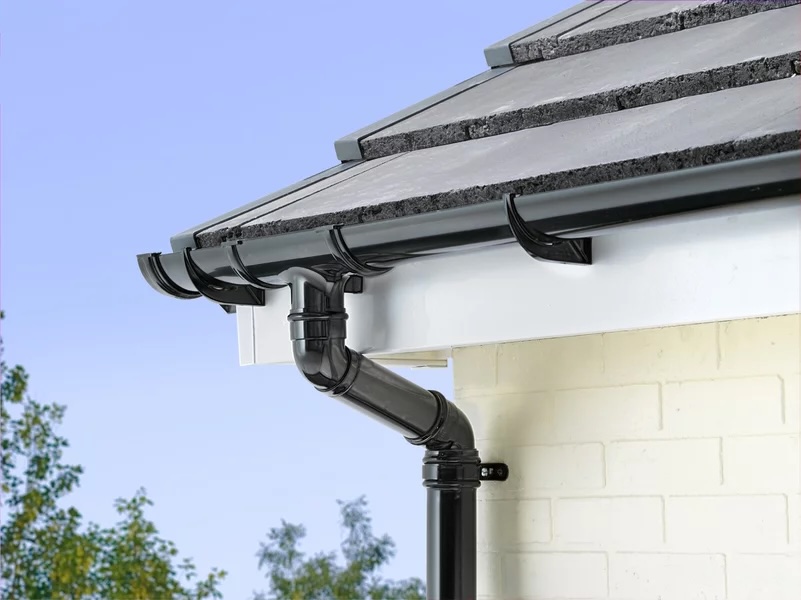 Typically, leaks in a gutter or downpipe are a result of a break in the seal, or in some instances, cracks. A damaged downpipe or gutter can be fixed by sealing the damaged area with a weather-proof gutter sealant or tape. A more severe hole or crack in a gutter may need to be repaired. A downspout that is blocked is typically the reason for leaks from gutter end caps. If you notice an end cap leak within a few feet of the downspout it's a sign that there's a blockage in the area. Instead of trying to remove the obstruction which may not solve the issue, you should consider replacing the entire gutter end cap. They are located outside and are therefore susceptible to being damaged by a variety of sources, including a vehicle hitting them, ladders leaning against them or ball games played by children. They can also be damaged by ice or abrupt temperature fluctuations. A downpipe could be a victim of corrosion or rust especially when the pipes are in the soil or against brickwork. Cleaning your downpipes regularly can help reduce the likelihood of a leak or crack that is forming. Guttering systems are constructed with a slight slope that encourages the flow of rainwater towards the downspouts away from the house. This protects your walls, roof, and the foundations of your home from water damage, as well as keeping damp from entering your home. If your guttering is secured to the fascia board using hangers, screws, or nails these can loosen over time due to wear and vibrations, or general wear and wear and tear. The loose fasteners may also cause small leaks around joints. Caulking or gutter sealant may be used to repair these leaks. You can use guttering clips as a temporary solution to hold the gutter.